Pages

Tuesday, May 24, 2011

An Exit Ticket of a Different Color

I spend my drive home most days reflecting on how the day went-what I need to reteach, what lesson I need to mentally bookmark to use again and which I need to mentally trash because they were a disaster.

Reflection is really hard for kids. I use exit tickets often to force them not only to think about what they are learning and how they are learning it but also to learn how to articulate that. Even at the end of a lesson it's challenging for them to put into words what they have learned-much less at the end of the day.

This week my kiddos are going to sum up their whole year. I asked them to make a list of their favorite lessons, poems, books, words-what they enjoyed learning this year and we're making t-shirts. It's a slow process but I was really pleased with the outcome so far. One student made his into a recipe format-another made a really impressive list of words.


Saturday, May 7, 2011

Teacher Appreciation

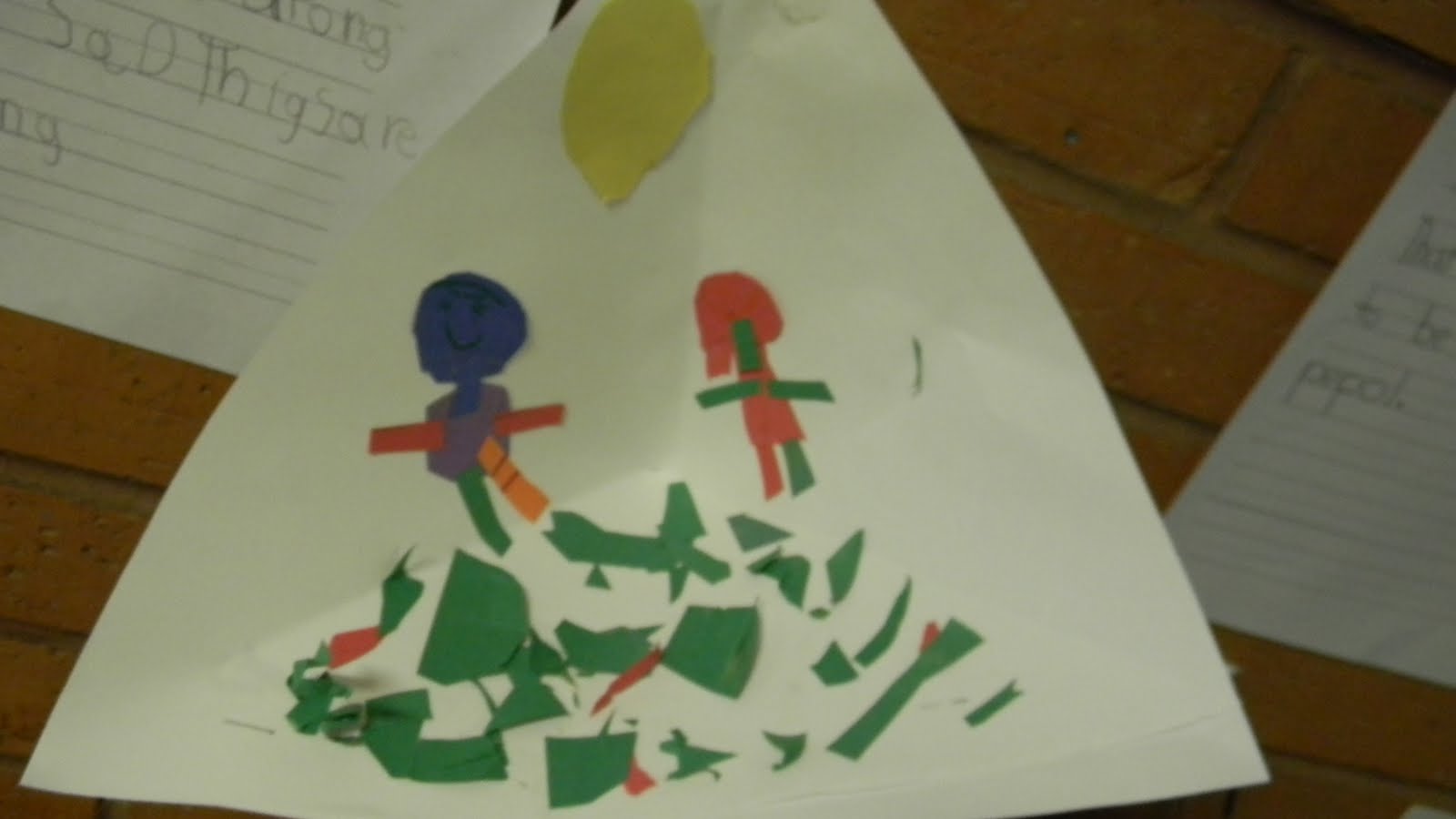
I head up our Student Council, and every year we try to make something for the teachers. This year we made little portraits of them using cutouts to hang on their doors. The kids made them for all of the staff and it was so cute to hear them talk about how they saw their teachers and aides.

"We have to give her a smile, she's always smiling".
"She wouldn't wear that, she dresses pretty!".
"What word should be put on her necklace-dream-that's a good one for her".

Here are some examples of what they made:


Our Pre-K kids think their teacher is obviously very "sparkly"! :)


Chapter Read-Alouds

I am a firm believer in reading aloud to children above their grade level. I am very lucky to be the facilitator for a student book club competition that allows me to find "treasures" I may not necessarily discover otherwise.

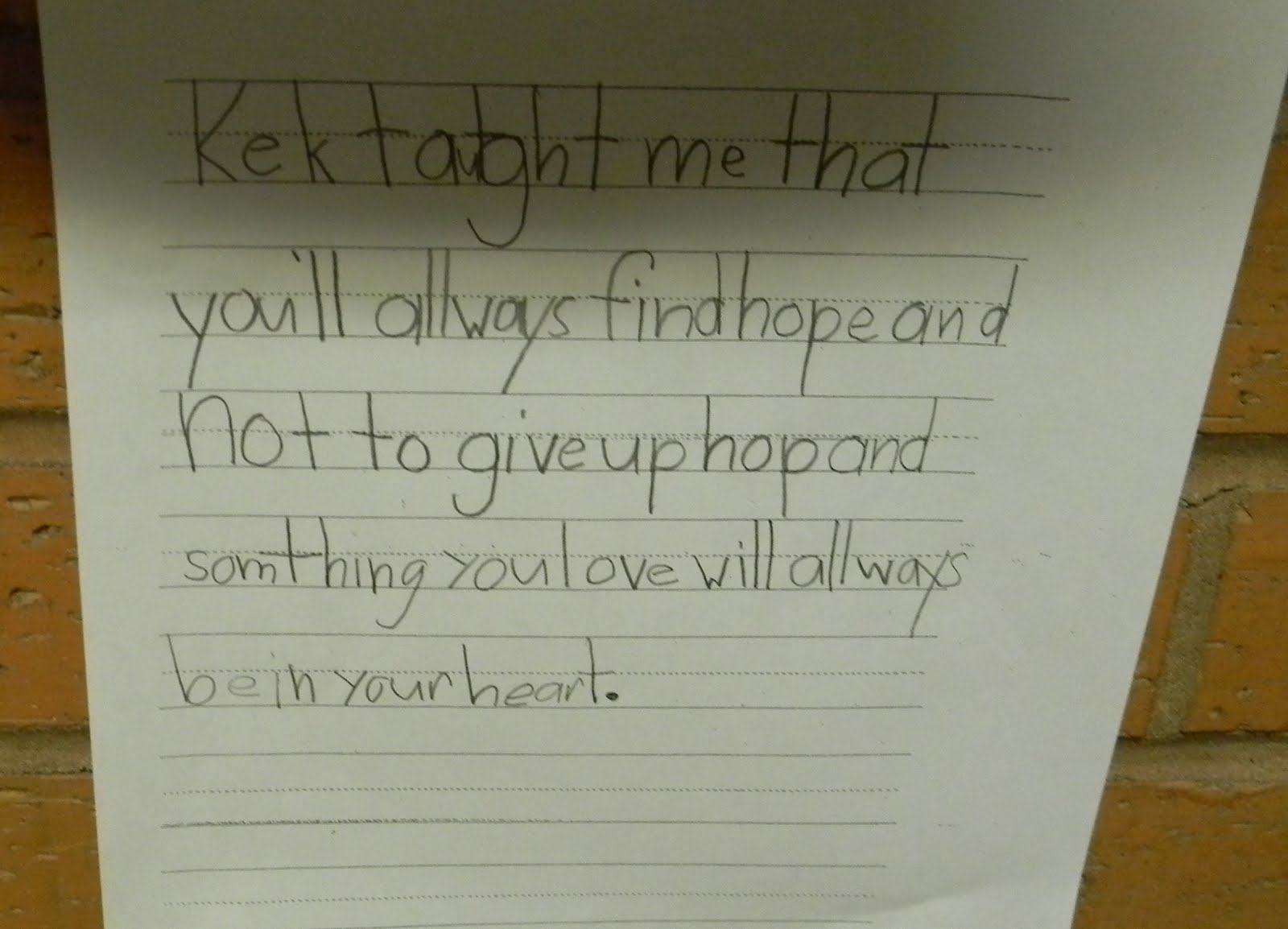
This year we had a book in the 3rd-5th category called Home of the Brave. It's about an African refugee (or as my kids spell it refyou-G :) and the process of assimilating to American culture. I thought some of the themes may be a little scary for them, I did edit just a little bit over the descriptions of the war. But some of the things that were new to the main character Kek, made the story pretty funny. And it does have a happy ending which is something these sensitive kiddos look for.

Anyway here is a reading response activity they did with a triorama to show the different plot elements. In the story their favorite part was when he puts the dishes in the washing machine in an effort to "help" his aunt with the cleaning. :)


My favorite-I know she meant to say "lost your parents". :)


The Book "Readicide"

I remember reading about this book when it first came out a few years ago. I've started my summer reading list a little early this year and just finished reading it. I found some of the author's insights really fascinating and unfortunately true.

He talks about how kids are losing their passion for books as they go up the grades. In Kindergarten they love to read stories and each year following we tap out a little more of that excitement. Even this year in 1st Grade, they are required to read passages in their standardized testing, so it's something we have to practice. As they progress through the grades, many teachers forego read-alouds for test passages-which are soooooo boring! If that was what I had to read all day every day, I'd probably hate reading too.

A couple of things I am going to do to help change this trend at least for my kiddos:

1) Let the students check books out to take home. I always record stories for them and let them take the story and the book. We had a Donorschoose project filled last year that gave us some mp3 players to use now. It's so much easier not having to rewind tapes. But many of our students don't have books at home or anyone who has time to read with them. You can't become good at something without practice. Nothing like a child asking if they can take a book and you turn around and they have like 7 of them. :)

2) Be more effective in getting parents on board with this. I know how busy everyone's lives are, but I read a study recently that said the #1 factor in whether or not a student is an effective reader is how often they read at home. Parents need to help get kids excited about adventures and various characters. I took a completely unofficial poll of my class and was truly disheartened to see only a few students are read to regularly at home. I have very fond memories of that myself-my mom used to read Superfudge and other Judy Blume books. We also read the whole Chronicles of Narnia set.

3) Give incentives. This year I told my kids I'd dye my hair blue if they read 1,000 books (they really got pretty close). I'm even giving them something to do over the summer to track how many titles they've read. Whoever does the most wins our class "buddy". I remember participating in these kinds of programs over the summer, you just don't see them as much anymore. I'm going to try to get my school on board with this next year as well-have a school-wide initiative to track reading just for fun.

4) Continue novel read-alouds. I cannot even tell you how much I enjoy this part of our day. No moans and groans, kids lie down in the circle and just listen to a chapter of the story. They remember the characters and talk about them like they are truly friends. Oh, I'm going to miss Dorothy. I wish Edward's book was longer.

We need to encourage our kiddos not just to be good readers, but to actually enjoy reading! It's so good for their vocabulary and I believe even spelling. The more they read, the better readers they will become.

Saturday, April 23, 2011

Being Able to Make an Argument

I moved to Texas as an adult and went back to get certified ending up having to take the exams many H.S. seniors take. I still remember the essay question-Should college athletes be paid? Make an argument for one side or the other. Now, let me tell you I am such a girl when it comes to sports-I don't even know how many touchdowns you need to win a basketball game :). But I did it, because I can make a logical argument. There was recently controversy about an SAT question asking them to write about the benefits/detriments of reality t.v. People complained that not all kids watch those shows. If you know how to make a logical argument, I believe you can fake your way through any kind of debate.

I came across this article: http://www.edweek.org/ew/articles/2011/04/20/28schmoker.h30.html?tkn=LRNF3VzAFxCof4Jm6ooMgSQGwEqgRldYR6Mn&cmp=ENL-EU-VIEWS1

Texas opted out of common standards, so I really haven't seen much of them. But I'm glad logical thinking is being included. Kids when they come to me really don't know how to justify an opinion. You ask them which character was their favorite, they respond, you ask them why and they say "because it is". Logic has to be consciously taught.

We do an activity often that I call "pro/con". I divide the kids up into pairs, one is pro the other is con and I give them a topic: Sharks make good pets (for fun) or The Giving Tree was wrong (for a curriculum connection). They have one minute to make their cases, then-this is the hard part... they have to switch sides and make the other side of the argument. They have to defend owning a shark for a pet or the selfish boy. It literally takes 2 minutes and it has really helped develop the answers I now get from the kiddos. Instead of I like them because I do...they give me a more thoughtful, cogent response. Parents probably don't like that I'm teaching them to argue better-but if faced with essays or even talkative dinner guest in the future-- they will be better prepared.

Tuesday, April 19, 2011

Standardized Testing

I read this article and thought it an interesting take on the process. She talks about how she used to teach logic and critical thinking before testing. I agree with several of her viewpoints.

http://www.washingtonpost.com/blogs/answer-sheet/post/the-critical-condition-of-critical-thinking/2011/04/17/AFfCjcwD_blog.html

I hate those 2 words-standardized tests! :) Our BIG test is in just a few weeks and I really dislike that our curriculum just melts away until it's over. We have test prep booklets in Reading, Math, Language Arts and Science from 3 different companies. That's a lot of class time that is expected to be taken up with straight test prep. Part of me wants to skip the prep-work altogether-they've learned what they've learned-hopefully that's enough. Then I feel like I'm short-changing them. They should be used to answering in the multiple-choice format and using strategies, even if it's not something I would use as an everyday assessment of learning. So, it's finding a balance that's really difficult for me.


Now, I know what you're thinking..but GT kids should naturally do well on tests. Not necessarily the case. First of all, sometimes they race through because they think they know everything. They don't need scrap paper for math-"I'll just do it in my head". Doesn't always work that way. Also, not all my students are gifted in all academic areas. I have kids who excel in math but read on an average or even a little below average level. I have great readers who just don't "get" math. And of course, no matter how much we try to make these activities "fun", they are perfectionists and want to get 100% - that just isn't in the cards when it comes to standardized testing-otherwise they'd all score on the post-high school level. So if they run into some questions they just don't know the answer for, they get discouraged and will sit there pouting for the rest of the time. Another factor is: it's a week-long test (that's developmentally appropriate, don't you think?). So by about the 4th day, most are just bubbling in answers, not even any energy left to try.

I really wish I could tell them, it was OK, it's just a test, doesn't really matter in the scheme of things. But since that's the only thing after a whole year of teaching that is going to be able to show my value-I have an invested interest in them doing well too. Those little percentile numbers are all I am worth as a teacher.

I think we will all be breathing a sigh of relief when May 13th has come and gone.

Sunday, April 17, 2011

Egg Drop Competition

I wanted to do something fun in class this week and also make it a team building activity. At this age, you have such a range of personalities working together. We have the bossypants, the I'll-put-my-feet-up-and-let-you-do-the-work kids, etc. I made participation and teamwork part of their grading rubric. Before we started we discussed team dynamics and the real-world application of working in teams. We introduced the word "compromise".

In the spirit of the season we did the ever-popular egg drop competition. The students brought materials from home that they thought would help make an apparatus to help protect an egg. We also watched a clip on Discovery Education of the Mythbusters and their take on this project (my kids just love those guys!).  The students made a blueprint of their plan and then set their construction into motion.  3/5 teams were successful and the others identified what they would change if they were to do it again. They used shoeboxes, sponges, bags of air; and I think most creatively--rubber bands around a wooden frame.

But most importantly, they had a lot of fun!