I found this book at the library and think it is just the cutest story! It's about a princess who wants a pony, and gets one-but it's not exactly what she had in mind. Of course, it all works out for the best. My students are going to love this one!
Wednesday, June 29, 2016
Sunday, June 26, 2016
Depth and Complexity Explained with Game of Thrones
Kaplan's Depth and Complexity is the crux of any gifted curriculum. I've had to explain it a few times recently to some new teachers at our school. Because many people watch Game of Thrones I thought that would be a great way to explain the meaning of these concepts. I thought I'd share them with you guys in case you are looking to use it with your kiddos and are also a fan of Thrones.
Unanswered Questions-
these are questions that are for example, not explained in a story. These can be details that are missing or storylines left unexplored. Sometimes you can find answers to these questions, sometimes they are unanswerable. We can speculate answers.
What was the rumor Cersei was talking about a few episodes ago?
What makes Daenerys so determined to be successful?
Why didn't Sansa tell Jon Snow that she had talked to Little Finger about supporting their efforts with his troops?
Ethics
Ethics is all about two conflicting sides-who is right/wrong? Are you pro/con?
What is right for Ramsey to refuse to fight Jon Snow one-on-one, when that's what ended up happening anyway, but with the loss of all the troops?
Is it right to kill someone, like Joffrey if he is an evil person?
Rules
Rules is a hard one for my students. When they think rules, they think about "don't run in the hallway"-that's not quite the rules we are talking about here. We are talking about for example what is always true in a situation, what is the structure/classification system?
So what are the rules of living in the 7 Kingdoms? You should always own dragons, you need to be a little bit sneaky, you can never trust anyone, etc.
Across Disciplines
This is ways you can incorporate a subject across different subject areas. So for example, if we were to incorporate math into our Game of Thrones-how fast do the dragons fly? How many people are vying to be leader of the 7 Kingdoms.
Over Time
How things change over time. How have alliances changed over different circumstances? How has Arya changed throughout her experiences? Sansa?
Multiple Perspectives
One of my favorite icons to use in Kindergarten. Comparing different ways you can see the world.
Thinking about how the dragons see their world.
How do Cersei, Tommen and Margaery all see the High Sparrow now?
Language of the Disciplines
Thinking like a mathematician or an artist. How would people from the different disciplines see the same thing? If you were looking at the dragons-a mathematician would probably be calculating their size and wing span. An artist would be looking at shadow and light.
Patterns
Patterns is exactly what it seems. Identifying patterns in something. In Game of Thrones main characters tend to get killed off. Cersei's offspring all seem to be dysfunctional leaders.
Details
One of things I like to do with Details is changing something to see what details change. If Game of Thrones took place in the present times-what would change? If it took place in space-what details would change?
Big Idea
I actually don't like to think too much about things I watch for entertainment's sake, but I do think there has be be some Big Ideas going on in this story. I think there could be religious themes, there are definitely themes about power structures.
Trends
What are some of the trends I've noticed from Game of Thrones-well my favorite one is you don't want to mess with the women! Cersei, Sansa, Daenerys, Arya and Maergery are all such strong, powerful women. Another one is when a Stark loses their wolf, they tend to lose their life. You could also look at the trend of how many people are watching the show. Last week they had record numbers which is not common for the 6th Season of a show.
So I hope that helped explain these concepts. Remember they are not just for gifted students. I still incorporated these ideas before I taught in a gifted classroom. They are great for inspiring deeper thinking!
Friday, June 24, 2016
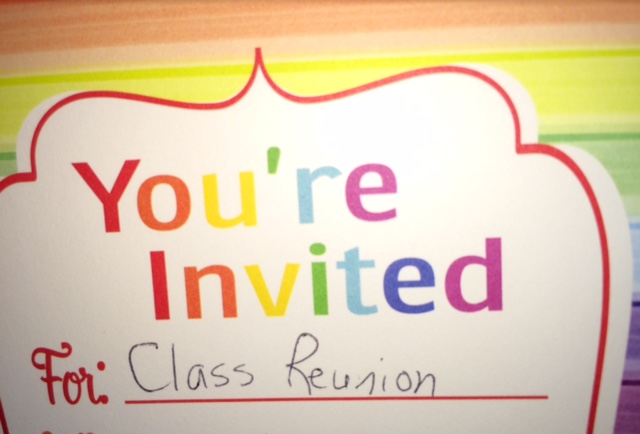
Summer Class Reunion
Saying good-bye to my kiddos this year hard. We went through a lot this past year and as we were packing up at the end of the year I had an idea. Let's do a reunion this summer at the local public library. I mailed out invitations last week and today is the big day. I can't wait to see my kiddos and share some books with them again! I'm going to get some of their favorites and some new ones I know they will love!
Thursday, June 23, 2016
My New Picture Book Finds
I do a book club with my students and every year we are given a new list of books. I am driving my library crazy requesting all of them to read this summer so I can prepare for this upcoming school year! Many of them are Bluebonnet nominees. Anyway, these are my favorites so far:
This book shows how one dessert (Blackberry Fool) was made 200 years ago, 100 years ago and today. Technology is one of our Social Studies objectives and I can totally see this being a perfect way to show how new tools make things easier. I also foresee us having to actually make whipped cream the old-fashioned way with elbow grease to show them how different it actually was.
I am not a huge history buff or anything, but I consider myself to be a fairly intelligent person when it comes to knowing about big events. I can't believe I never heard this story before! I knew mesmerized was named after a person, but I didn't know Ben Franklin got involved in debunking this "magician's" mesmerizing cure.
This book is something the kids who take public transportation can relate to as well as being a great model for positive thinking! I really enjoyed it and can't wait to share it with my kiddos next fall.
Wednesday, June 22, 2016
My Coding Club
So Todd Nesloney of Kids Deserve It fame is doing another summer learning series. If you are interested in trying out cool new things, it's something you should really at least follow on Twitter-#KidsDeserveIt.
The first one asked what was our favorite new activity that we tried last year. I'd have to say my Coding Club! Now, I am not a very tech-savvy person. If you show me how to do it, I can usually do it but I also am the one Googling how to do things all the time. Coding was not something I had very much prior knowledge about. I do remember back in the olden days (as my students would say) when we were trying to program our TRS-80 computer to play hangman. One little dash missed and the program wouldn't work. But I kept hearing about programs at schools that offered coding and I started to look into it.
Last summer I did the Code.org training which gave you not only experience with completing the puzzles but also complete lesson plans with off-line activities you can do to help build up their perseverance. I took the plunge and offered a Coding Club in the mornings two days a week to our Kinder and 1st Grade students. They loved it! I had about 15 students who would show up early every week and several who completed the whole first course.
Next year I plan to expand a little bit, maybe including the older kiddos and using Scratch and other programs to change things up for those who are already now fluent in this new jargon. I can see it helping with their critical thinking skills, their tenacity, their attention to detail. I'm really glad that I was able to do it and I was really happy with the experience the kiddos received.
Tuesday, June 21, 2016
Making Inferences
I'm teaching a summer school class right now and this is one of the skills we are working on. Here in Texas we refer to this objective as Fig. 19-it's on the STAAR test questions and it's something we are reminded in almost every meeting that the kids have difficulty with it. I have to admit-sometimes I do too! :) You can ask my sister who was with me when I first saw the Sixth Sense at the movie theater and when they started to reveal the fact that Bruce Willis' character was really a ghost-I didn't get it. I think part of my issue is when I read or watch a movie I am just getting lost in it, not really thinking about where it's going. I think that's why so many mystery books are ruined for me when I figure out who did it before it's revealed-I like to be surprised!
One way I think you can work on this is with stories where the ending particularly isn't really spelled out. We can discuss how we think through that reveal, how we get to the point of understanding. These are some books I think are great for those lessons:
I really love Neville! It's a story about a boy who moves to a new town, depressed that he has no friends. So he goes out on the street and just starts yelling "Neville". Many kids come to help him find Neville and only at the end do we discover that he is actually Neville. The kids usually figure it out before the end so we can discuss how they came to that conclusion.
Jon Klassen is really the king of making us think about what the meaning of the book really is. This one included.
A bear asks many creatures in the woods if they have seen his hat-they have not. Again you really have to pay attention to the illustrations to figure out what happened. The ending was a little bit shocking to me the first time I read it-especially for a children's book.
An oldie, but a goodie. I can remember reading this book as a child. It's only $3.00 right now on Amazon. The inference the kiddos have to make is that Grover is actually the monster waiting at the end of the book. I love reading this one aloud and doing the different voices.
Of course, any wordless book will do, but this one a recent favorite of mine. Daisy loves her ball and then one day something happens to make her sad. There is a happy ending though. You really have to infer what happens in the end.
Monday, June 20, 2016
Books for Creating Risk-Takers
One of the first conversations I have with my students is about taking risks. I am very clear to define the difference between taking a risk like jumping off a roof into a pool (not what I'm recommending) and raising your hand to ask a question (what I do encourage). I want my students to take risks and I try to model that for them as I'm teaching.
One thing that I think students relate to is characters from stories. We often revisit stories we've read and reread-that reminds me of..... or it's just like what happened to....These are some of the stories we read the first few weeks of school-I think they are role models for the kind of risk-takers I want my students to be. I know you probably already know about Tacky the Penguin, Stephanie and her ponytail, Vashti in The Dot and Elmer. These are some title you may not have heard of before:
I think teachers can even learn from this book! I have seen teachers who just don't understand students like Oddrey. It shows how being odd can even save the day.
Monique, very much like Stephanie from Stephanie's Ponytail wants her own look. But everyone always copies what she does to spice up her school uniform.
Another example of how you should be yourself, even if people think you are odd.
I love Molly Lou Melon! She has buckteeth and a voice like bullfrog-but it doesn't stop everyone from loving her.
My all-time favorite "be yourself" story. Woolbur isn't like the other sheep and his parents are very worried about it. Fortunately, he is willing to take the risk of being himself.
Subscribe to:
Posts
(
Atom
)