Pages

Wednesday, September 12, 2018

Expectations

I listened to this the other day and it really got me thinking.


I have read other similar studies done in high schools where poverty is an issue and where it isn't. The teachers just plain expect less from the kids if it is a poorer school. I was in a training once and the speaker asked how many of us believed our students would go to college. I was one of the only people who raised their hand. It made me sad. If you don't believe it, guess what-the students won't believe it either.


I work in an area of low economic development. Like you worry about having to leave the building after dark. My students have faced many obstacles before they even started school. Many are speaking a different language at school than they speak at home. Many have multiple siblings and parents just don't have time to sit down with them after school to complete homework. I would say over half have at least one parent who is incarcerated. However, this does not change my expectations for them. I expect them to learn just like the kids across town who have been given every advantage. I still introduce them to the concept of college and truly have hopes that they end up attending.


I think this applies not only to the expectations we have for our students, but also for our faculty members. The school I left last year really set the bar high for teachers. We were expected to teach not just the required curriculum, but also to introduce the upcoming year's objectives. Rigor in our lesson plans was a requirement as well. We pushed our students and made sure they were challenged.
My school now just doesn't have the same culture. The general consensus is that everything has to be cute. It's just a different mentality. This school also does not have what I would consider to be good test scores-they slide by. Now, whether that is due to the family circumstances or the curriculum-I can't say for sure. But I believe that with this administration the expectations are being raised and that will help teachers raise expectations for their classes.

I tell the story often of my dog Ruby. She was 3 months old when I adopted her from a shelter. From the drive home that day she was pretty much a holy terror. The 2nd day I called my mom and asked if they did exorcisms on dogs. :)  I brought in a trainer to help give us tips on how to train her. They observed her at the first session and at the end the woman asked "is she always like this?". Like what? I asked. "Does she not jump into your lap and cuddle with you?" -No. I responded. "Well, I think you should return her to the shelter, she is never going to be the kind of dog you want her to be".  I was flabbergasted! If she as a trainer didn't believe this puppy was going to learn..... needless to say we found another trainer-one who wasn't ready to give up so easily and let me tell you 9 years later and she's the perfect companion for me!


Keep those expectations high-I think the outcomes will surprise you!


Saturday, September 8, 2018

Parent Communication

I believe the relationship between teachers and parents is paramount to a child's success. I have had my share of parents over the years who were unhappy with my class. And I really take that personally, it feels like I failed them in some way. I think one of the hardest things that we do is find a balance to try and please all the parents of our students. Each family enters this process with different expectations. Some families want a lot of homework. Some families have busy lives with dance classes and choir practice and are thankful for teachers who do not assign homework. I worked with a teacher once who had a parent volunteer one day and that mom went to the administration to complain that it was too hot in her classroom. She was told by admin to turn the air up and make it cooler. Well, then she had kids going home and asking to wear sweaters (in Texas!) and parents wanted to know why it was so cold in the classroom. It's not always an easy balance to strike.

I try to contact my parents before the 1st day of school. Sometimes the rosters are not ready or they are still making changes, but I really try to reach out. There are parent newsletters coming home every week and I have a class website.

But I wanted to share what I do in addition to that.

Seesaw Digital Portfolios-This app has pretty much changed my life! Not only can I post pictures of the activities we do in class, but I can also explain the activity. When you teach in early childhood, your students are not going home and saying we discussed the ethics of the Giving Tree today. Parents look at the work that we are doing, it is authentic work, but they don't know what we did. I used to get complaints from parents that I wasn't challenging my students, and you know that is my passion. I finally figured out that if I share what we are doing daily parents can see the rigor in what we do.


Parent Dialogue Journals- Years ago I had a parent who was extremely unhappy with me as a teacher. I was venting to an administrator and she said--you are blaming the parent, look at your practice, what can you do differently? I was in a training and they were talking about doing dialogue journals with your students and a lightbulb went off.

I buy composition notebooks when they are 50 cents at Wal-Mart over the summer. I create a journal for each family and every Friday I send home a note about their child's week. It sounds like a lot of work but I take half the notebooks home on Wednesday and half on Thursday. It takes me about a half hour to write all the notes.

Some parents really appreciate this and write back every week. I actually had a parent tell me once that it was like receiving a hand-written letter about her child every week and she really looked forward to that. Some parents will just sign that they read it. Some parents never respond and I don't know whether they are reading it or not, but I continue to write the notes anyway.


How do you communicate with your parents? Always looking for new ideas. :) 


Friday, September 7, 2018

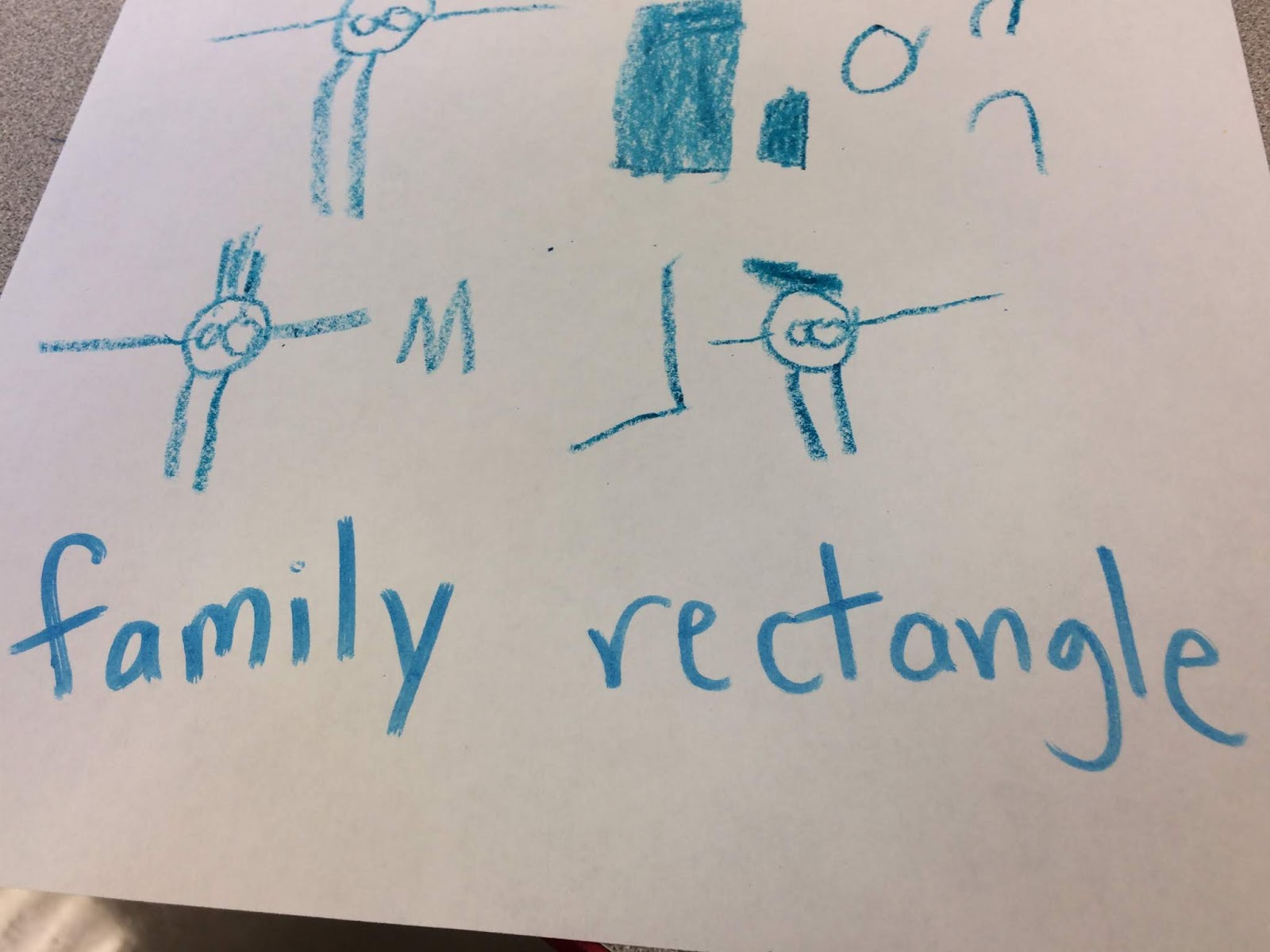
Rigorous Family Trees

I am always looking for ways to challenge my students and foster creativity. Family Trees are a great way to show how families grow-but they are so Old School! I asked my students to invent a new way to track their families. I think they came up with some very creative ideas. Remember these are Kinder students and this is only the 2nd week of school. :)


Thursday, September 6, 2018

Being Unique

I love to start our year off with titles about characters who stay unique, regardless of what others think. Here are a few of my favorites:


This is on Tumblebooks read by the author if you have access to that site (our public library grants free access with membership). Stephanie wants to be different and asks her mother to give her ponytails that are different from everyone else's.


My favorite part of this book is the teacher's reaction to Oddrey. Sometimes teachers do not value uniqueness in their classroom.


Woolbur is utterly and completely himself, even though his parents struggle with that a bit. I LOVE the ending of this story.


Ferdinand is a peaceful bull. He loves sitting under trees smelling flowers and does not let life's circumstances change that at all.


Tacky is not like the other penguins, however that turns out to be helpful in the end.


Thelma gets discovered and becomes a Hollywood legend-but she misses being her old self.


Monique finds a trunk in her mother's attic and tries to spice up her uniform, despite her teachers' chagrin.


Stellaluna is accidentally dropped into a bird's nest. Mother Bird tries very hard to change her into a bird-but it just doesn't stick.


Elmer doesn't like how he is different, but the animals end up changing his mind.


Olive definitely marches to the beat of her own drummer.


So we read Unique Monique and I asked the students to take pictures of each other-what makes you unique. Here are some of the responses:


Tuesday, September 4, 2018

Bubble Maps In Kindergarten

We have been using Thinking Maps at the campuses where I have worked for years now. The Bubble Map is the hardest one for my Kinders to understand. The bubble map is made up only of adjectives and that concept is difficult for my little ones. Not to mention none of them are writing words yet. So we did a modified version of our Bubble Map.

I read them the story of Molly Lou Melon:


After we read the story we discussed how we would describe Molly Lou and the students drew her in the middle bubble. Then they drew pictures to represent the words they were using to describe her. I actually think this steps up the rigor there. They could say "happy" but what could they draw to symbolize that. I was very impressed with the thought processes some of them had. :)