Pages

Wednesday, June 29, 2022

Differentiation for Your Advanced Kiddos

Differentiation, in my opinion, is the hardest part of our job as teachers. Especially in the early grades, we have students that come to us with a wide spectrum of abilities. The inclination is often to spend most of our day catering to the needs of our low kids. They need extra guidance with the assignment. We are told to pull them every day for small groups, the advanced kids once a week. The whole class is coloring the sight word "the" because half the class did not pass the high frequency word test. I believe this not only does a disservice to those advanced kiddos, but over years of this they actually lose that advanced status. They don't make the progress they could be making and get frustrated. 

So what can we do. Here are my suggestions:

1) Everyone does not have to work on the same class assignment. If we are reviewing plurals and are ready to move to guided practice. My low kids are working on a hands-on activity to add "s" to words and make plurals. My middle kids are deciding "s" or "es" applying the rules we have learned. My high kids are deciding apostrophe "s" for possessive or just "s" for plurals. All students are engaged and I can sit with my low kids and help them as needed.

2) Homework should be differentiated. I will never forget a friend of mine complaining because her daughter's teacher sent home a letter A to color-this girl could not only identify all the letters she was reading on a 3rd grade level in Kindergarten. She literally asked her mom "why do I need to do this, I already know this?" I think about that a lot. Sounds complicated but I assign my students Group 1, Group 2, Group 3-I tell them it's based on the skills they need to work on. Group 1's homework is sounds, Group 2 sight words, Group 3-reading comprehension-just as an example.

3) Challenging them does not mean more work! I was in a class once where the teacher said Johnny always finishes in 10 seconds so I give him these packets to complete. *sigh* These students can be working on:

* independent study projects based on their interests
* writing comic books                                              
* writing digital stories                                             
* making a game for workstations                            
* coding activities
* creating a game for the class on sites like Blooket or Pear Deck

4) Still pull your high groups. All students can improve their reading skills and deserve an opportunity to work with the teacher to do that.

5) Differentiate spelling lists. I personally don't really even believe in traditional spelling tests but we have to do them. So my groups each have different lists. If they can get 100% on the pre-test on Monday, then that grade stands and they challenge themself with harder words. I give them a picture dictionary and they pick out words they want to learn (last year I had a student that wanted to do all the different kinds of dinosaurs). Or I give them words based on the same spelling pattern. Group 1 will have pout, Group 2: couch   Group 3 will have: glorious. That way everyone is still learning things they have not yet mastered.

6) I have extolled the virtues of Pear Deck before. What I love about it is that I can record on the Google slides and then students can answer the questions. So I can make one with sight word practice and one with activities for fact and opinion, or vocabulary. Students can work on these and be learning on their own level.

7) Having students who are finished go read a book or my biggest pet peeve-go help others who need help is not helping them master a new skill. People always say "well, helping someone else learn makes you learn it more". No, it doesn't. If they can already read the sight words, helping another student learn sight words is not helping them. They need to be working on fluency, comprehension, vocabulary skills. Tutoring the other kids is my job.

It takes a bit of planning and a bit of organization but once you get into the habit, it's easy to make sure everyone is learning something new every day.


Thursday, June 23, 2022

Advice for New Teachers

Saw a tweet the other day asking if you could back to your 1st year self and give them advice-what would you say? That really made me think. I've been teaching for 20 years now so that newbie teacher feels like it was a lifetime ago. I can remember just trying to fake it when I really didn't know what I was doing. My "mentor" teachers mocked my interest in using what was then "new" techonology-a projector you could plug into your computer. In Kinder we gave a standardized test in December and it was never once mentioned to me by them even though they did practice test with their kids filling in bubbles every day. My principal was very nice, but she never came out of her office so if I had a question, I had to tentatively knock on that closed door fearing that I was bothering her.

So what have I learned over the years.

1) I think the hardest lesson for me was that you cannot please everyone. There will always be parents and colleagues who will complain about you. I read this recently and it really stuck with me:


2) There are also going to be students that you cannot reach. No matter how hard you try. No matter how many "build a relationship" strategies you use. Some students will be shut down. They won't be receptive to your learning style or may just plain not like you. You have to come to terms with that.

3) Differentiation is soooo important. I found a class picture from my first year cleaning out my garage and a printout of grades. Two students had been labeled LEP. I don't even think I knew what that meant back then. I certainly don't remember doing anything differently for them.

4) You will get a lot of advice when it comes to classroom management. My best advice comes from the movie Roadhouse with Patrick Swayze. In the movie he is a bouncer and is telling other bouncers that they have to "be nice". You ask nicely. You ask nicely again. Until it's time to "not be so nice". My students can tell by my tone when I am serious. I believe wholeheartedly in SEL and in creating relationships. But there is a time when you have to "not be so nice". There have to be consequences that are enforced. I am actually known to be a bit of a battleaxe to everyone except my students. :) Kids at dismissal fear me because they know I will stop them and ask where they are going. My students will tell you I am the nicest teacher in the world. There is a balance.

5) Ask for help. Asking for help is not a weakness. And any admin who views it as a weakness is not being an effective leader. Even with 20 years experience I reluctantly went to my admin this year and said my kids are just not making the growth they should be making-what do I do?  We all need help sometimes. Find someone on your campus that you can trust and whom you respect. Even if that's not your official mentor.

6) Take every opportunity you get to use the restroom. Seriously. If you are pulled out for an ARD and you are on your way back to class-use the restroom. You never know when you will have another opportunity. :) 

What would your advice to your 1st-year self be?


Wednesday, June 8, 2022

Assessing Creativity

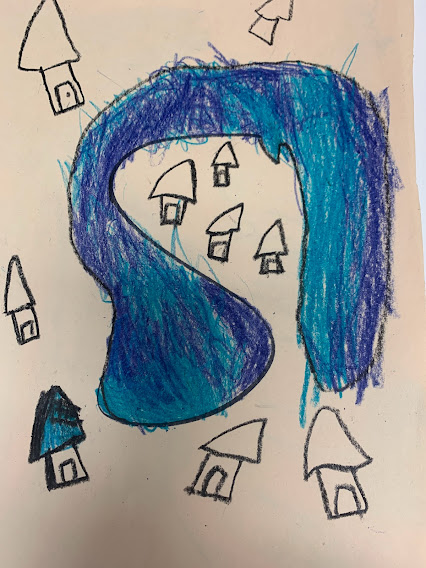
There is a lot of controversy when it comes to whether or not creativity can be taught. I believe that you can definitely help students discover their inner creativity and apply that to how they learn. How do I know? Day One I have my students complete a Divergent Art activity. Divergent Art is when you give students a shape, line or squiggle and ask them to turn it into something. The first one I use is:


Now in the beginning most students make it into an 8, or an S or a snake.

We read lots of stories about people who are creative and unique. We play a game where they break up into groups and come up with creative answers-only if they were the only group to say that answer do they get a point (I have blogged about that before). I model for them and praise when someone comes up with a unique answer.  We do activities like this one periodically throughout the year. And at the end of the year with the same squiggle, I get answers like these:


Creative right?! The key is to keep practicing and modeling. I know they leave me with more of those creative juices flowing and I can show that. 


Friday, June 3, 2022

This Has Been A Year!

As we come up on our last few days of school I thought I would share what it was like for me this year.

I teach 1st Grade. As I assessed my students the first week of school I discovered that most of them were on a beginning Kindergarten level. 90% of my students could not identify letters and sounds much less read any words. So I knew my work would be cut out for me. I restructured my plans, created new workstations and used every second of the day to try to catch these kids up.

We did 45 minutes of intervention in the morning. I worked with them daily in small groups for reading and for math. By January I was still really worried that they wouldn't make the growth they needed to make. I even went to my administrators to ask for advice on what else I could do. I would spend about 2 hours a night and the whole day Saturday preparing lessons, intervention activities and recording progress monitoring. I had to document what I was doing and the assessment of 14 students every week. It was truly exhausting.

What really bothered me is the district still went through with the same district tests, the same standards knowing that because the previous year was hybrid, many students had gaps. It was very stressful to have to justify in meetings why students were not meeting benchmarks. Half my students missed over 20 days this year, 3 of those over 40 days. They were quarantining, etc.

In the end I was very proud of the progress they made. We did not give up. 14 out of 20 students passed their reading test to be promoted to 2nd. Most others could read at least half the words.

It was a lot of work but that work definitely paid off.

Here are our Beginning of the year reading scores:


And here are our final scores:


A lot of students came back with serious behavior problems-but from Day One we stressed SEL skills and had morning meetings to greet each other and share feelings. My class became a family. The hardest part is you spend 10 months together, 8 hours a day and then you have to say goodbye. It's going to be hard to leave this year. I truly need a break and to decompress, but I will miss them. 

How was your year?


Tuesday, May 31, 2022

Inspiration Projects

Years ago I worked with a teacher who gave me this idea for an end-of-year project. We discuss the word "inspire" and the students think about what inspires them at school. They take a photo of this and then create a project from that photo. First, creating a watercolor painting and then a collage. Finally, they write why they chose that as inspiration. My favorite part of the project is watching the students do all this independently-we have created enough art throughout the year that they know exactly what to do. 

Here are a few from this year:


Thursday, May 26, 2022

I Wish You More


We read one of my favorite end-of-the-year reads:


So we read the story which talks about having more umbrella than rain and more bubbles than bath. I asked the students to add their own page to the story.


I think she meant: I wish you pizza more than scary things.


I wish you more loving than sadness


Wednesday, May 25, 2022

I Will Choose the Kittens

So we were out at recess recently and I saw a bunch of students crowded around a shed on the playground. Of course, I go to investigate. There are 3 kittens probably a few months old, they look pretty healthy. I chase the kiddos away because I don't want them to accidently hurt or scare the babies. It seems like there is a mama cat taking care of them, I feel like they will be alright. Well, that afternoon at dismissal I see a dead mama cat with exactly the same coloring as one of the kittens (we have lots of stray dogs in the area and we have some huge hawks). So now I'm worried about them.

I was talking to one of the administrators and she said if I can catch them, she will find them homes. So I took the whole class outside. Talked to the kiddos beforehand about how we have to be quiet and still and wait patiently for them to come out. Anyone who did not want to help could sit on the bench and watch. The students talked about how the babies must be scared without their mom and how they are glad we are able to help them. With food we lured 3 hungry kittens out and followed the mews to one other that got separated from its siblings on the other side of the building. Bad storms moved in later that day and I was so glad we were able to rescue them because I don't think they would have survived on their own very long.

Later that day I am in the office and overhear one of my teammates criticizing me. She says "well, some teachers focus on teaching curriculum and some teachers focus on kittens". *sigh* I have actually heard that she says things like this about me to people all the time-that I don't follow the curriculum. First of all, that is just false-the curriculum is absolutely my guide. But I am also 100% the teacher that will take a class outside to help the kittens! I believe there are so many skills outside of the written curriculum that will benefit students from learning-that we have to teach the whole child. What did they learn that morning:

1) How to be still and patient in waiting for what we want

2) How to care for animals.

3) How to think about others.

4) How to solve a problem. Many people just walk past situations like this. We did something.

5) They learned empathy and thinking from another perspective.

I am also reminded of a time it snowed (in Texas that does not happen very often) and I took the class outside so they could catch snowflakes with their tongues-that class is now graduating from high school and I still remember that moment. Was it in my lesson plan? No. Was it a learning experience? Absolutely. Students learn more if it is something they are interested in. If I know a student loves lions, we design a unit around that subject. Informational text about lions to teach text features. Problem solving in math using zoo animals. Classifying mammals in science. All objectives but they are learning them in a way that taps into their interests.

Parents are out there declaring "just teach the curriculum" as they rail against social-emotional programs and diversity days. This year in my class we practiced conflict resolution and anger management skills. We learned how to debate, how to make a polite, cohesive argument. We read tons of diverse stories. Had many discussions on how it's ok to be unique or different. We learned how to present publicly. We learned how to create, how to think critically. None of those skills are specifically listed in any of our curriculum materials-but are they important? Of course they are. 


I will ALWAYS choose the kittens and I do not apologize for that. You want to know who I am as a teacher-that is who I am.