Pages

Wednesday, July 22, 2026

New Teacher Tips

Being a new teacher can be exhilerating and scary. We have all been there! Here are a few things that I think every new teacher should remember:

1) Make a master list of contact info for your roster. Allows you to easily pull up and contact parents in an emergency or even to fill out the nurse's pass.

2) Create a master list of IEP accomodations. You will be required to document the use of these daily in your class as well as in the grading system.

3) Most schools use a parent communication network like classdojo or Parentsquare. I go down my roster and every week I send a positive message to the parents for 5 students. When I have gotten through my whole list I start over again. This helps me create a positive relationship with families so if I do need to contact them for a negative situation they will be more likely to believe me. Negative reports all the time and parents tend to ignore them-the teacher just hates my kid.

4)Positive sticky notes and notes to students.I do this before testing, at Thanksgiving ( I am thankful you are in this class) and just because. It helps promote a healthy positive environment. 

5) Use the restroom at any opportunity you have. :) You are coming back from a meeting, at lunch. It may be your last chance for hours. 

6) Be kind to the helpers. Whether it's a teacher assistant, custodian, cafeteria staff or secretary-they are the undersung heroes of your school. Appreciate them. You never know when  you will lock yourself out of your classroom or you will need grace because your class was late to lunch.

7) Know that you will never please everyone. No matter how hard you work, the effort you put in there will always be kids/parents/colleagues who disagree with hor you are doing things. Try your best to accomodate everyone but at the end of the day you are accountable for student progress.

I wish you the best of luck!There are always challenges but it is very rewarding to see how much the students will grow. 

Reach out if you ever need any assistance.


Sunday, June 21, 2026

Video Clips for Big Idea

Let's face it-kids today have a short attention span (as do some of the adults) :). They go home and spend hours watching instagram reels or tiktok videos. So I tap into that interest. I use short video clips to spark discussions about Kaplan's depth and complexity. 

Today I have some examples for Big Idea. I give my thoughts on what I think the major theme is but of course, kids may have other thoughts.  Could also be used as a writing prompt.


What is the big idea here?

* Don't give up. Get up and try again.


Dream big! You never know what might happen.


The universe is so vast. We are a small speck.


What obstacles can we compare this to in life?


How to work well under pressure? 


How girls see themselves compared to boys. 


How amazing is it that animals are born with a skill like this?


The things we take for granted in nature.


Best moments in life are free. 


People tell her to be more humble-we should be ourselves.


The video credit is listed on the videos. Let me know if you use any of them! I will make it a series for the different concepts.


Monday, June 15, 2026

Student Surveys-Reshaping Your Practice Through Student Feedback

One year I was teaching a class and a student said "you always let Robert do what he wants because he's your favorite."  This bothered me. Out of curiosity I asked who was my least favorite student? And they said "Carlos". I was horrified. I love all my students. I don't have a favorite or a least favorite. So this information made me reconsider my classroom management strategies and I think revolutionized my teaching practice.

So every year I formally do a survey of my students. I use Pear Deck and ask them for their honest opinions. 

* what does Miss Trayers like?  (I really liked that their answers this year showed they knew me well and it wasn't all about rule following).


* Miss Trayers doesn't like.... (again if they say a student's name here-I failed them).

* What does Miss Trayers always say?


* and for fun I asked them to draw me. I LOVE that I am smiling in each picture but they also captured my big earrings. :) I am known to accessorize.

The important part is I take these responses and reshape things for next year. For example, I taught 4th grade this year and would see a lot of immaturity from the boys-I think I acknowledged that too much because several said I favored the girls in the class. Next year, I will make sure I focus on changing that. They had a lot of positive things that I would say. One said "I love you"-I have never actually said those words, but I think it must be the way I made them feel so  that makes me smile.

A simple practice, but one that can really give you a view into what works and the biases you may have that you don't even see.


Thursday, June 11, 2026

Teaching Elementary Students About AI

So it seems like AI is an inevitability-however you feel about, it is already here. Students are using regularly without even knowing that Google is an AI tool now. We need to teach students how to navigate these tools responsibly.

Information Literacy is something that it is never too early to introduce. Even with my Kinder students are on Instagram and Tiktok. They will tell me stories about something as if it really happened because they saw it on YouTube. Many of these students have unfettered access to technology at home. Parents don't even monitor what they are looking at. I had a Kinder student who would go get her mom's phone after she went to bed and spend hours on YouTube (mom thought it was something wrong with her phone battery because it was never charged the next day). 

So how can we introduce this to younger kiddos. There are videos like this one:


This is AI generated. This videos expalins how that works. 


I am always talking through how I model Googling something. A student asks "do fish drink water?". I google it but am cautious to point out that even though an answer appears-the sources are to the right. Am I going to trust a source like YouTube? Reddit? Or the National Oceanic Institute?

Laying this foundation early on will help these students in future research endeavors. I truly believe kids who are more informed about what is reliable and trustworthy will make better decisions in the future.


Wednesday, June 10, 2026

Books to Teach Kids to Build People Up

One of the things I hate to see is kids putting each other down. Whether it's laughing at a question or mocking each other for differences. We have a mantra in our class--is that bringing that person up or putting them down. The kids laugh in the beginning but by the end of the year they are quoting that mantra themselves. 

Here are some books that can help teach students to be kind:


One thing kids today do not know how to do is listen. They make everything about themselves. If you talk about your dog they start saying "well my dog....". We have to teach them how to listen and I think this book helps do that. 


This is a wordless book but powerful nonetheless. It's about standing up for people who may not have a voice of their own.


One of my all-time favorites. Talks about how kindness ripples out to others.


Everyone does not think the same way. This is a book about embracing and valuing differences.


I have actually had parents complain about kids making fun of the lunches their child brings to school. We need to be open-minded to differences, especally cultural differences and this is one way to explain that. 


My all time favorite book! Molly is different-she has buckteeth and is short. But it does not stop her from being fierce. They say she sounds like a duck and she says "quack". What an amazing role model for just being who you are.

Kids today are not getting instruction in SEL skillds. We need to correct that.

Let me know if any of these are your favorites as well.


Tuesday, June 9, 2026

Introducing Ethics to Young Learners

Critical thinking and creativity can absolutely be taught to our learners in early childhood. It takes persistance-they may not get it the first time. But if you are consistent in challenging your kiddos you will see the growth in their application of these skills.

One of my favorite concepts from Kaplan's Depth and Complexity is Ethics. Judging what is right and wrong. This can be achieved with stories:


Was it right for the Gingerbread to run away from the little old couple?


Was what the boy did right? What the tree did?


Of course we can look at David and say what he did was wrong but was his mom right in her response?


Was it right for the letters to go back up the tree again at the end?


Ethical arguments: I would also include an activity to discuss a question as part of my ELA warmup-it's oral language skills right?

So every day I gave them a question? Is it right to pick up a dollar you found on the sidewalk? What about if you saw who dropped it?  Is it right to have rules at school? I teach them how to listen to their partner and then form an argument as a response.

What I want to impart in my students is there is usually a grey area. I am reminded of Les Miserables when he is arrested for stealing a loaf of bread. It is wrong to steal of course, but ther eare situations where people may see the grey area.

My favorite thing is to watch them grow into good arguers (although their parents probably do not appreciate that. :)   


Wednesday, March 25, 2026

Depth and Complexity with Little Ones

My passion in education is rigor. I wanted to share ways to incorporate that into your daily lessons. These activites can be done with all children. They inspire deep and critical thinking. 

Let me know if you listen and what you think. )

Thanks so much! Enjoy!


Thursday, October 30, 2025

Using Tech with Little Ones

I know this is a controversy among many people. There are so many comments, especially on social media about how Kindergarten students go home and are on screens so maybe they shouldn't spend time on that in schools.

I disagree. We have a responsibility to teach students how to use technology to create, to play, to learn and to write. Young kids are easily engaged with tech and it teaches them skills they will need for their entire academic careers. All of our standardized testing is online-if they never learn how to navigate it, how will they be successful.

How do you do this with little ones?

*Digital Stories-there are several apps like Book Creator that allow students to write and draw. We do stories for fairy tales-they write their own and also for Mother's Day they write about their moms.

Differentiation-I LOVE Pear Deck! The paid version allows you to record and I use this often with my students. I make one version for kids struggling with letters and sounds and one version that's a little more challenging for my advanced kiddos. I have digital activities that I bought during covid and I use reading a-z readers. 


Blooket-I used this even with my Kinder students! I would make up games to review concepts we were learning or just for fun I would make up questions about how well they know me as well as how well they know their classmates. Who is an only child? Who love unicorns? For my advanced students I would let them make up the blooket game. Not only did this help foster typing skills but also critical thinking but coming up with wrong answers helps them learn how to navigate multiple choice questions they will see in the future. 


This was a student created game. They were so excited to play it!


An example of how to practice decoding skills with it-most were cvc words-mad, sad


Math-fill in the missing number

They even practice typing and spelling by choosing a name.


So technology can go beyond the daily reading and math apps! Even with the younger kiddos. I am always amazed at what they can do but they are growing up in a digital era. :)


Monday, July 21, 2025

Introducing Depth and Complexity

I read a query on a FB group for gifted education. They were asking how do you introduce Depth and Complexity. In the beginning? In a certain order?

So I wanted to share how I do it. Remember I work with little ones-they have never heard of these concepts before.  I start with Multiple Perspectives. I read:


I show the kids how if I stand up on the table my perspective changes. I have them stand in their chairs and look around. What is different? This story is told from the perspective of a school on the first day. How does our school feel?

The next one I introduce is Ethics. Ethics is my favorite concept from D&C. I ask them questions-is it ever ok to steal? (this is going to be an interesting conversation this year when "Thou Shalt Not Steal" is framed on our wall.)  Anyway is it ever ok to steal? They always say no. What if your baby is starving? (the Jean Valjean argument) What if there's a hurricane and my neighbor's not home but I know he has batteries? It is important to me that the students learn ethics are not black and white. Right and wrong is not always black and white. So every day as part of our ELA warmup I give them a question to discuss.

Some examples:
It is ever right to lie?
How what is the difference between fair and equal?
Should teachers treat all students the same?
Should kids treat all teachers the same?
Should girls be soldiers?
Should we always share? (Giving Tree is a great story for this idea).
Is it ok to break a rule?

The students discuss and learn how to make an argument. I give them sentence stems to help guide them "I agree with that because..."  or "I do not agree with that because". By the end of the year they are expert debaters. :) (the parents love that).

Next I introduce Rules. What is always true about something? What is always true about a car? What is always true about our school? What is always true about teachers? The car is my favorite discussion they say "all cars have tires" and I show them a picture of a car on cinder blocks. All cars have a roof-I show them a picture of a convertible. It's hard to set "rules" for things because there are often exceptions.

Unanswered Questions-my students come to me not knowing how to ask good questions. As part of our daily warm up for ELA I show them a picture. What questions can you ask? 

What is going to happen next? Are they on the same team? How do we know?

You can ask math questions as well:

    
Image: Texas Pauses Re-Opening After Surge Of COVID-19 Cases

How many cars? Are there more white cars or red? What is the temperature?
The key here is not answering the questions, but coming up with questions to ask.

That is where I start. Then we focus on these concepts for a while before introducing the others. 


Thursday, July 17, 2025

Book Recommendation

This summer I have been participating in a book study with Donna Lasher at Big Ideas for Little Scholars. She is a tremendous resource for gifted education if you do not already follow her, I highly recommend it. 

She suggested this book:


I broke my self-imposed book buying probation to pick up a copy and I was happy I did. There are many highlighted pages and has been very thought provoking as I examine my own practice. Now, my district was taken over by the state and I am prohibited from implementing a lot of these ideas-but I think I can sneak it in. :) 

He talks about the way our students brains are rewired today. And I see this in my own classroom. My kinder students last year were begging for validation constantly. Look-I wrote my name! "Johnny good job" and Sally says "what about mine?". I always say to them what do you want me to do like and subscribe? But there is scientific evidence to explain this. They literally get a dopamine rush when they get that validation. 

I also liked the chapter about teaching kids progress over perfection. I have even made connections to this in my own life. I have been taking better care of myself this summer but not really seen the results I was hoping for. But it's progress that counts. He calls this "snailing it". Slow and steady wins the race.

He talks a lot about engagement and how we can use the way students learn today to develop better lessons. 

I don't read a lot of professional development books because especially teaching young kiddos I usually have trouble finding ideas I can use. But I recommend this one.  


Monday, July 7, 2025

Chapter Read-Alouds for Young Learners

I am a huge believer in reading to students above their grade level. Not only does it help build vocabulary and comprehension skills, it also allows for more deep conversations. Getting to know a character over time, tracking their arcs really allows for complex challenging activities.

I usually begin with Charlotte's Web. A classic that I think still holds up. We read the first chapter at the end of the day on the first day of school. (I skip over the whole axe part). This leads to conversations about whether or not animals communicate with each other, with us-maybe not in words but in gestures and expressions. We learn about the word "humble" and "radiant". One of my favorite memories was when I was reading a line that said something like "she stepped back and marvelled at the web". I explained what the word marvel meant and one of students said "I love that word. Marvel". I know she was echoing something I often said when we hit a word I loved.


After that I pretty much know my students and factor that into what to read next. This past year they really didn't have much of an attention span. So we read:


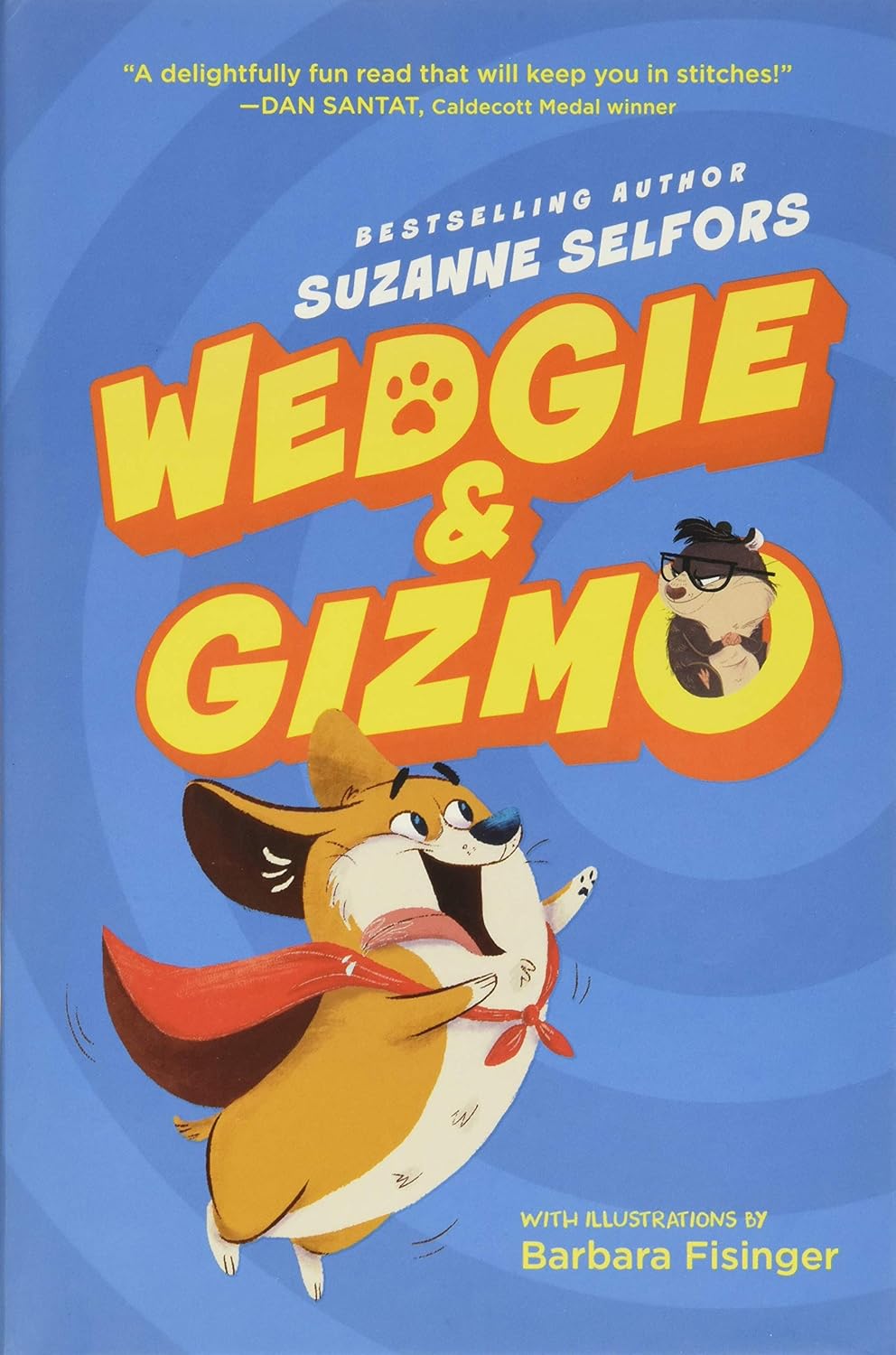
One of the best examples of voice I have read for young children. I read Wedgie's part (a high energy corgi) with him talking very fast and they get a real kick out of that. :) Gizmo is a guinea pig who wants to conquer the world and Wedgie is your average superhero dog. My class last year loved this book so much they begged me to read the sequel too. 

This is one of my favorite books to incorporate depth and complexity concepts. 


This character changes so much Over Time. We see him through Multiple Perspectives and he offers something different to each person who owns him. We can talk about Trends in dolls and toys-has it changed over the years or are there classic ones? And the deepest discussion on whether it is better to love and lose than never to love at all. And yes, even my Kinder kiddos get it and think some deep thoughts about this. I like to read the Velveteen Rabbit and compare/contrast the stories as well.

The rest of what I read depends on the class. One year I had a class obsessed with wolves so we read A Wolf Called Wander. I have read the Wizard of Oz, Beverly Cleary (old school I know)-Mouse and the Motorcycle. I like other Kate Dicamillo stories like Tale of Despereaux. We have read the One and Only Ivan and even the Wild Robot (although this one is pretty long). 

I love the conversations and writing activities we can do to incorporate the themes of these books. If i need a journal entry idea we can write about this. Most of my students are not read to at home-whether it's because they don't have the resources or parents do not believe it is worthwhile (just read an article about how Gen Z thinks reading to your kids is boring). Modeling fluent reading is so important for young learners. Comprehension withtout relying on pictures is essential too. So many benefits!


Wednesday, July 2, 2025

An Hour of How to Incorporate Rigor in Early Childhood

I have shared this before but I thought it was time to share it again. I wanted to share the way I incorporate rigor with my young learners. 

I know sometimes it's hard to know where to start or maybe you are looking for new ideas. I have no way of tracking how many people watch it but maybe it will help someone. Free professional development right? :)


Thursday, June 19, 2025

An Exercise in Creativity

One of my favorite activities to do to foster creativity is this one. I split the kids into groups. I choose a letter of the alphabet and each group will discuss an answer. My favorites to use are foods, animals and places. So a place that begins with T. Now the key to this game is when we reveal our answers the group that gets a point has to have a different word than the others. So if one group says Texas and another group says Texas and a 3rd group says Turkey-the 3rd group will get the point becuase it's a creative answer. The goal is to be the most creative.

Animals:  robin    bird    panther


Puppy   bee  rat

Rat    penguin   bird -so since penguin and bird are repeated they did not get points for those answers.


Place: Gorilla Shop (I know-we have to emphasize it has to be a real place)  Owen's House   House


HEB    Octopus Store    Goat Shop

Home Ocean   Gas Station


Food:  meat    lettuce    cabbage


Coffee      Muffin    ?

M&M's       lime     cupcake


We play this maybe once or twice a month and it has really helped with their creativity when they write. Instead of just writing what everyone else does they come up with a more creative answer. For Kinders I think that is a good foundation.


Wednesday, June 11, 2025

Introducing Depth and Complexity-Multiple Perspectives

Kaplan's Depth and Complexity concepts are a great way to initiate students into some deep thinking. But where do I even start?

I teach Kinder students. I start with multiple perspectives. Putting yourself in someone else's shoes. I will literally channel Robin Williams in Dead Poet's Society and get up on a table. Look around-my perspective is different. I urge students to stand up in their chairs (they look at me like I am crazy but they do it). 

Then I read:


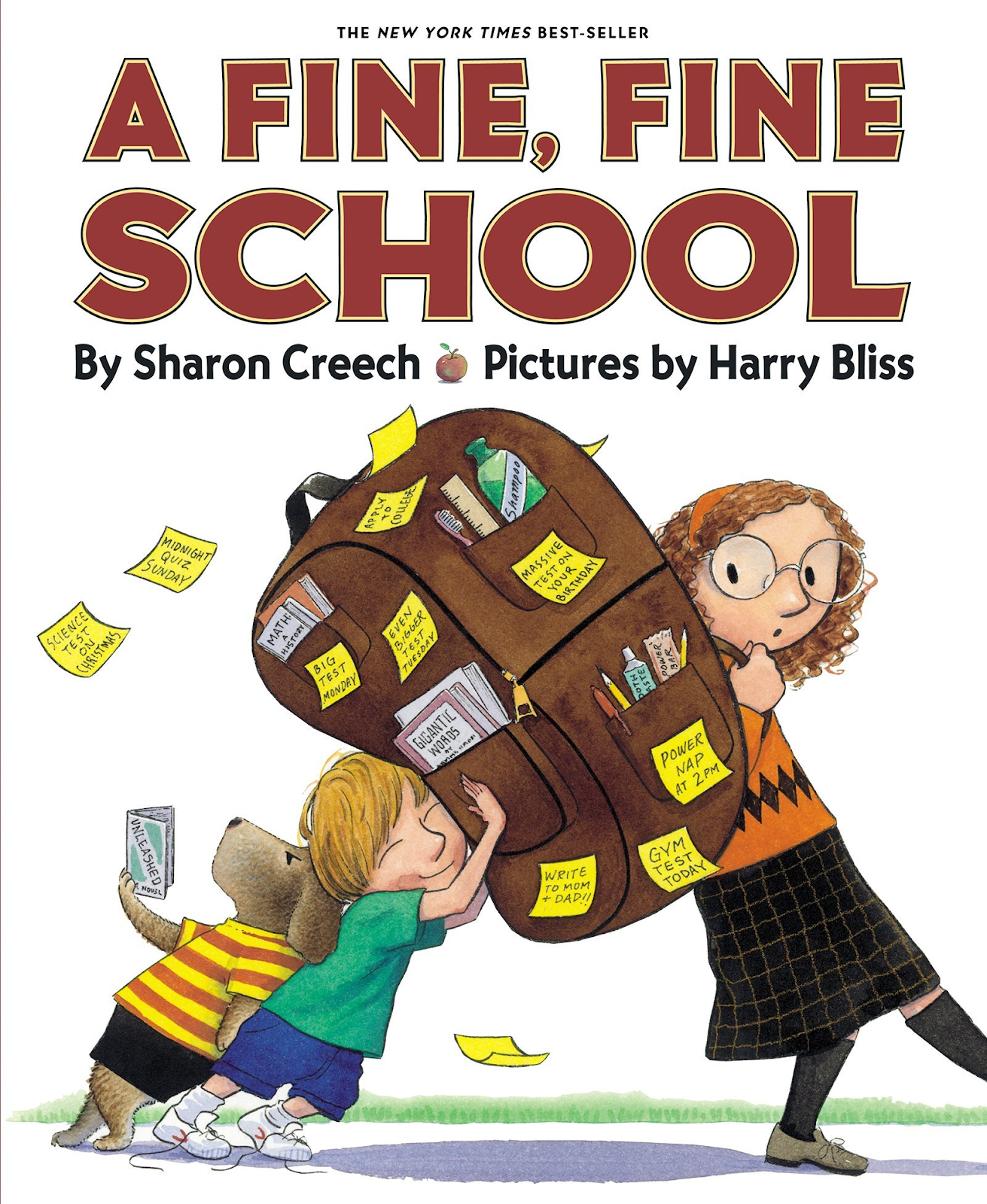
It is told from the perspective of a school on the first day. They are so happy to start school until things go array. I ask students to illustrate how they think our school felt on the 1st day.

I also read:


I ask students to write what they would do on the first day as a parent. My favorite response was the student who wrote (I would just run away real fast). 


And we consider the perspective of a principal with the book:


We write "If I were a principal, I would....".


As the years go on I feel like the students are more and more self-centered. Look what I did. Do you like mine? What about me? I truly believe if you do activities with multiple perspectives throughout the year the students will turn from being little narcissists to thinking about others. We were walking out the playground at the end of the year and one of my girls said "I've been thinking about dinosaurs. How did they feel when that meteor came?". It truly does make a difference in their thinking.