Pages

Sunday, July 7, 2013

Stories About Real People

I like reading non-fiction books to the kids. I think it's good to expose them to that genre and also they learn about things that they didn't know about before. All but one of these books would not be considered non-fiction, however they are based on real people.

I've always been a fan of Jane Goodall. I think it's amazing when, particularly women, stand up and continue to do what they believe, even when being doubted. This story is about her and her love of all things science and nature--how that lead her to become who she is today. So often I don't think we think about our heroes as young children. And, I'm a sucker for a clever title.....:)


Another favorite of my kiddos is:


It's about Alice Roosevelt (Teddy's daughter) who apparently was quite the little firecracker! She was the Princess Diana of that time period and all eyes were on her. My favorite part, when she says she wants to "eat up the world".


I actually learned some things I didn't know from this one! It's about Audrey Hepburn-how she got her start, the ton of work she did for charity and why she chose to do that. Just someone that the kids definitely don't know about before you read it, but a great role model to learn about.


 A little bit of a selfish pick, I know and one that's a higher reading level. I think Mark Twain was one of the wittiest writers in the history of time. This story about him is told by his daughter who is secretly watching him for  few days in order to gather information for the biography she's writing about him. My favorite part: he's reading a book off his shelf and chuckling. His wife asks him what he's reading and he says he doesn't know, just pulled a book off the shelf. Turns out it was one of his books!


Who can resist a story of unlikely friendship? Owen lost his mom in a storm and they rescued him after lots of effort and took him to a wildlife reserve. It took some work, but the crusty old tortoise eventually warmed up to him and now they are inseparable!


Friday, July 5, 2013

Characters With An Identity Crisis

I am making lists for myself now and thought I'd share one of them. Because I usually use a theme for our read-alouds, hoping it will help the kiddos make some connections, I am trying to categorize some that they aren't already familiar with. One of the themes that I think can make for a very humorous story line is an identity crisis.

Take this big chicken, for example:


He's not sure what he is and his friends certainly have some funny theories. But his different-ness certainly comes in handy when dealing with an egg-stealing wolf. This is a also a book with great lesson fodder for punctuation as well-lots of questions and exclamation marks!

Then you have poor:


He was born with looks that defy his family tree and certainly terrify his parents (he looks like a normal human *gasp* ).


One of my favorite fractured fairy tales:

Mother Duck takes care of all her little ones the same-even if one looks very different from his siblings. A swampy version of the Ugly Duckling with a Moose as the misunderstood one.

And then we have:


I really liked the premise of this story, I just was not a fan of the ending. I thought it was a little bit violent for a picture book. The "hot dog dog" as my students call them :) grows weary of his domestic life and decides to run with the big dogs, so to speak. When he sees what wolves do (that's the kind of violent part), he of course changes his mind.

Did I miss any others that you can think of?


Catching Readers Before They Fall Book Study-Chapters 3-5

Linking up again with Kimberley at :


For her book study on: 


So I have a confession to make--I don't think I was every really taught how to teach reading. I don't remember specifically taking a class on it through my certification process at all. I do remember my first year teaching Kindergarten and buying lots of books that would explain different methods and I think I learned by watching other teachers in action.

What I really like about Chapter 4 is it asks us to examine the dialogue/modeling we do when students are reading a sentence. I am teaching summer school right now and one of our promotion standards for 1st and 2nd grade is reading 80% of the words from their high frequency word list. Do you want to know how many kids are still just trying to sound out those words? One is own or on, said is sayed. I know it's their go-to strategy, but as the authors point out in the English language, as I am fond of telling my kiddos, many words do not follow the rules (much like Kindergarteners!).

This chapter definitely gave me ideas to start that dialogue and incorporate other strategies in their toolboxes.

Chapter 5-I completely agree that all kids need to be read to and am often surprised at how many enter Kindergarten without ever having been read to. I worked in an office years ago when I was working toward my certification and asked a friend to "borrow" her 4-year old son for a study-I was supposed to work with an emergent reader. Now Erica was by all appearances a great parent, that child was her world. But I couldn't believe he was holding the book upside-down when we began. I asked her what his favorite stories were and she said "he only likes movies". So the teacher in me bought him the Giving Tree as a gift at our last session and he literally threw it on the ground and said "I don't want this". It just makes me wonder how many homes today do the video games and DVD players take time where kids used to be reading and read to.

Anyway, I even go so far as to record stories on mp3 players (thank you Donorschoose!) and let them take home the books and recordings to listen to. So I am giving them every opportunity to hear someone read to them at night. I also believe that children should be given time to read independently-I struggle with how to do this with my very emergent readers in K though. I also believe writing is very tied to learning how to read. You can tell a lot about a child's literacy level by looking at their writing!

Chapter 6 -The Interactive Read-Aloud

Definitely lots of good tips for how to get those discussions started. One thing that struck me was the quote from Junko Yokota: "Mirrors let readers see the reflections of their lives; windows let them see others' lives". It's a struggle even with those kids that have innate abilities in reading sometimes to get them to make those connections to a story.

Thank you Kimberley, for encouraging us to read this book-I am getting a lot out of it!


Remembering Novelty

Novelty is something I think we often forget about in our classrooms. We base our classroom management plans on routine and consistency. Most of us get into a groove and rely on the same resources and activities year after year. But sometimes just a little change can make things more exciting for our kiddos.

As some of you know, I have a German Shepherd who is my 90-lb baby. The people at PetSmart will tell you she's spoiled--but I prefer the term "cherished". :) She is incredibly smart (and that's not just a proud mama talking) and picks up on things very quickly. In a training session when she was about 10 months old I taught her to dip her head with simply a clicker and food reinforcement in the span of 5 minutes-she will still do that on command. I was having problems with my knee last summer and was a little slower on our walks; I didn't even have to say anything to her, she just slows her gait to match mine.

Why am I telling you all this? Well, my little GT baby gets super-bored with her toys very quickly. She loves to make noise and squeak, but that only lasts a short time. She has a soccer ball toy with a hole for treats that she will drop for herself to make the treats fall out, but if she's not getting anything out of it after a few minutes, she'll abandon that too. So I will often do this:


This is several of her toys tied together and she will shake and tug and play trying to get them apart. It's novel, so she's interested again.

I think it's important to do the same things in our classroom as our school year goes on. Change the layout of the room. Change out materials. The kids will walk into the room and notice that your desk is now turned the other way or a new bulletin board is up. I think I'm especially challenged to do this in the fall because my kids are very used to me and our routine. I am definitely going to change up my attention-getters this year and have been collecting a bunch of those to use.


I also plan to bring in this dollhouse that a neighbor made for my sister when we were little. (Great for for ESL kiddos I think-unusual vocabulary like fireplace poker or attic).  I'm still thinking about new ideas for us, but whatever it is, we will have some novel changes this year throughout the year.


Tuesday, July 2, 2013

Speaking of Math....

I was thinking about my good old standbys when it comes to literature about math concepts. I love to use stories to introduce or reinforce math concepts because it usually helps the kiddos visualize the idea better. I wanted to share some titles that you may not be familiar with:

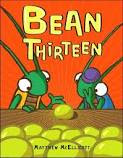
Good for introducing dividing into equal groups or even/odd numbers.


The couple has a pot that when you put something inside-it doubles!


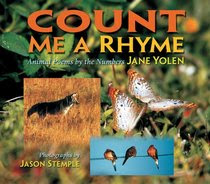
Good poems/photos illustrating the concept of counting.


This one can get a little long for the kids, but is a great illustration of shapes. I remember at a training years ago, they were saying something like 90% of kids missed a question on a shape on their standardized testing. It had 5 sides, but didn't look like the typical hexagon that they are taught is the 5-sided shape-they were all stumped as to what it was called. So I like that it this book teaches them that it doesn't matter what form the shape takes, but it's dependent on how many sides it has. And it usually sparks a conversation that luckily I have Google to help me because they start asking me all kinds of questions like "what do you call a shape with 20 sides?".

Hope everyone is enjoying their summer vacation. I only have a 3-day week at summer school this week, so I think I'll make it! :)


Sunday, June 30, 2013

Mental Math

One of my goals this upcoming year is to step up my whole group math lessons. I know I have to teach place value and I know that's a tough concept for most kids to master. Usually we do a warm-up with them, not only to spiral skills they are learning, but also to try and keep them thinking. I see a lot of things like anchor charts that tell the kids the strategies they can use for addition and subtraction-one of them teachers list is counting on their fingers. I may be in the minority on this one, but I actually discourage that in my class. On a test, I tell them they can use anything they need to answer the question, but when we are doing these whole group activities-I want them to think about the answer first. There's no reason they should have to count on their fingers to add 1 to 5-and definitely shouldn't have to count that 5.

 I will never forget tutoring a 4th grader for their big test years ago. The practice question was something like-Bob delivers 10 magazines a day for 5 days-how many magazines did he deliver? The student started counting on his fingers-1, 2, 3, 4, 5, 6....counted to 10 five times and got the answer of 49! I remember thinking to myself, I think my students would even count by 10's to reach that answer. These kiddos just aren't getting the practice in number sense that they really need to understand the math they are doing.

Here are some things I do to try and encourage a better understanding and I would love to hear your ideas on activities you use as well.


A quick little activity-I pass out foam dominoes and ask questions like-hold up your domino if your total is more than 5, or less than 6.


Mystery number-I have a number in my head and you have to ask me questions to narrow down what that number is. More than 50, less than 20, odd or even? I put this on the Smartboard and the students eventually run it themselves-one of the kiddos picks a number and fields questions from the students. My favorite part is watching them try to figure out things like if the question is more than 50-do I take away 50? Well, is 50 more than 50? And they discuss what they think with each other.

Real-world connections: Using photographs


How many gray planes? How many altogether? If the gray planes took off, how many are left? Pictures of castles or sailboats work well to review shapes-how many triangles/rectangles?

Buzz-my kids love this game!!! They form a circle and the one in the middle picks a number to be "buzzed". Any digit with that numeral in it cannot be said-instead they say buzz. So if the number is zero, when they count 8, 9 ,....buzz. You can make it harder by making it sums made from doubles or multiples of 5 as they progress.

Number dots:


This is a great way to start discussions about how they get to a certain number. How did you know it was 10-did you count 1+1+1, etc. or did you do 5 +5. Pretty soon they get pretty fluent and don't have to count the dots anymore.

What kind of review activities do you use to encourage mental math? I'd love to add to my toolbox! :)


Tuesday, June 25, 2013

Catching Readers Before They Fall Book Study Part Deux

I am linking up again with Kimberley at First in Maine:


Chapter 3

The first thing that jumped out at me was the statement that we have to work with the kids at their level. Teddy Roosevelt once said "do what you can, with what you have, where you are". I think about that a lot in teaching. They bring up blaming the teacher before-well, I definitely can't do that next year, since their former teacher was....me! :)

I have to admit-I'm not sure I ever learned about Vygotsky. If I did, the memory of that is long gone. But I was happy to be reacquainted with his theories again because it gave me a lot to think about. How am I going to use these concepts to help drive my instruction? I already think I'm pretty good at differentiating, but I definitely could be better. Especially when it comes to workstations. I don't think I pay enough attention to guided instruction. When I do a whole group lesson, we move on to more independent work, I think I kind of skip that step.

One thing that was reassuring is the social aspect they bring up about learning. I definitely include times when the kids turn to a partner and discuss or work in groups. We discuss a theme in ethics every day that way-they turn to a partner and then come back and share with the group. I'm teaching summer school now and have a variety of kids from different classrooms and it amazes me how they are so used to just sitting at their desks doing worksheets, reading passages. I'm not judging anyone else, but I can't teach that way and certainly these kids aren't learning that way because they are there for reinforcement of their skills.

Anyway, definitely a lot of food for thought!